Designing with people and psychology in mind, we increased the cart addition rate, as well as sales conversion rate by 11%.
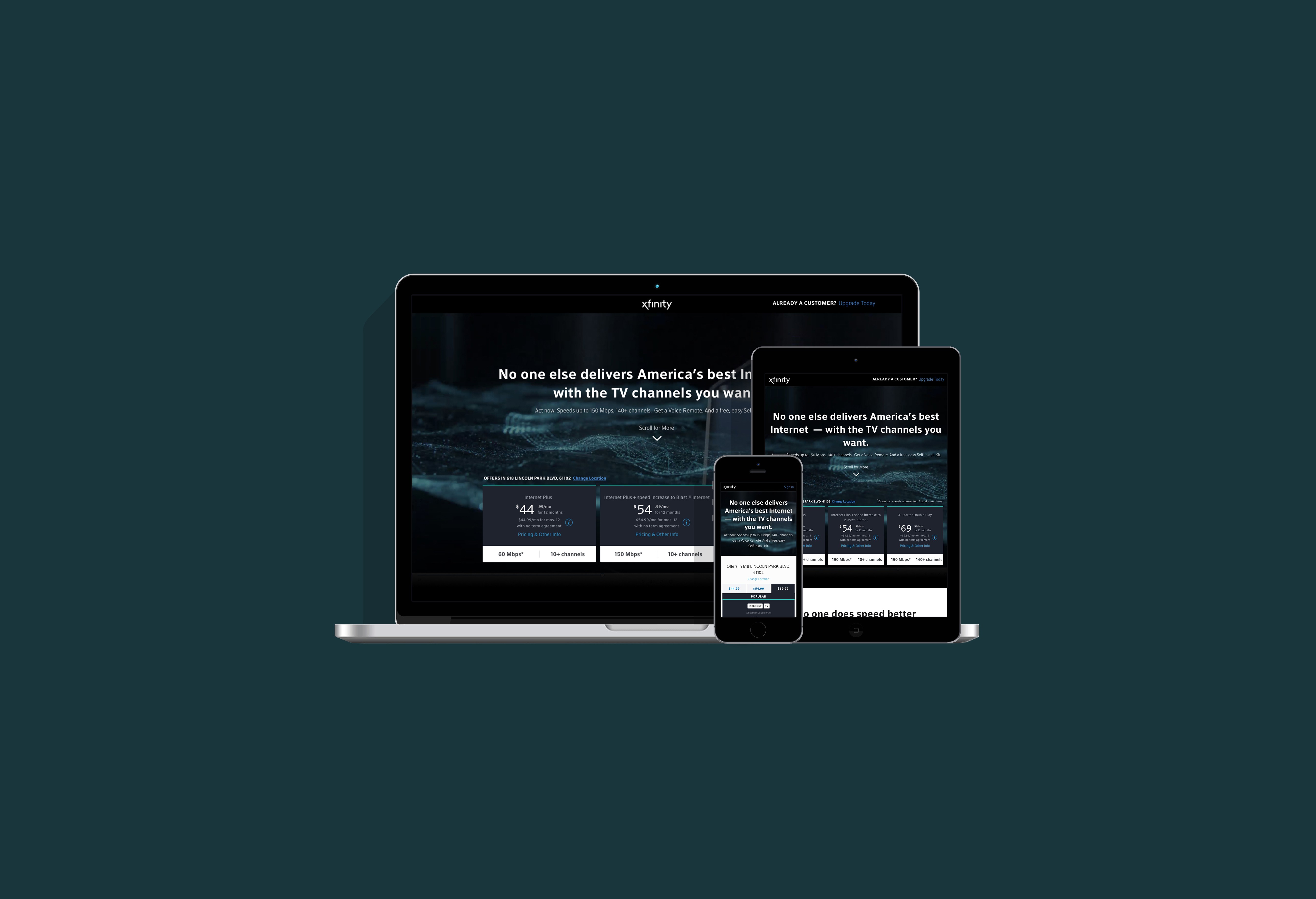
The User Problem
Users are overwhelmed by price and feature comparisons on the landing page and don’t fully grasp how Comcast's offerings differ from competitors. Their lack of understanding of speed options, package details, and skepticism toward the brand erodes their confidence, leading to hesitation in making purchase decisions.
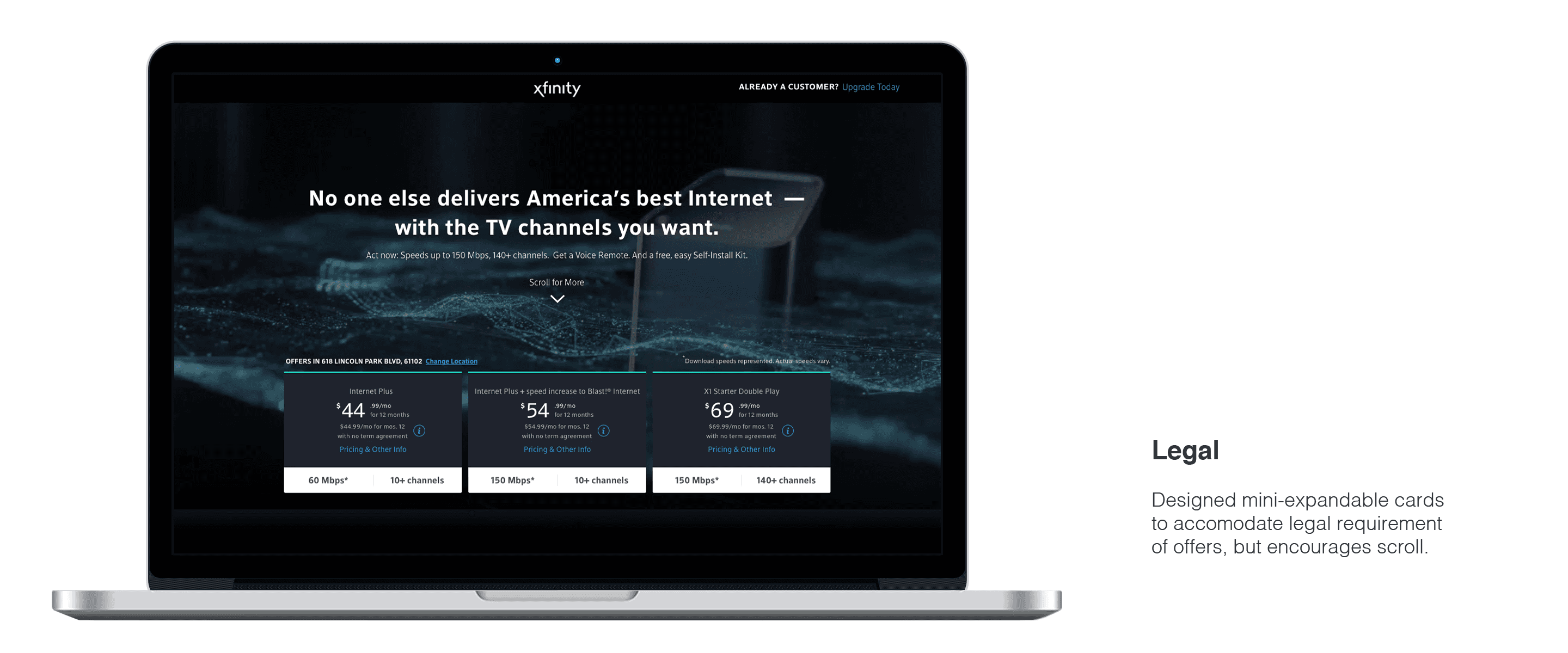
Business Problem: The current Paid Search Landing Page design is clean and minimal, but allows little room for iterative testing. Legally, users arriving on the page through a paid ad are required to see the lead in offer above the fold. Unfortunately, this puts users in an analytical mindset comparing prices and features of Xfinity to that of our competitors, before investigating how or why we are different. After numerous tests, we had not managed to increase sales conversation rate significantly. We received approval to test a complete redesign of the page.
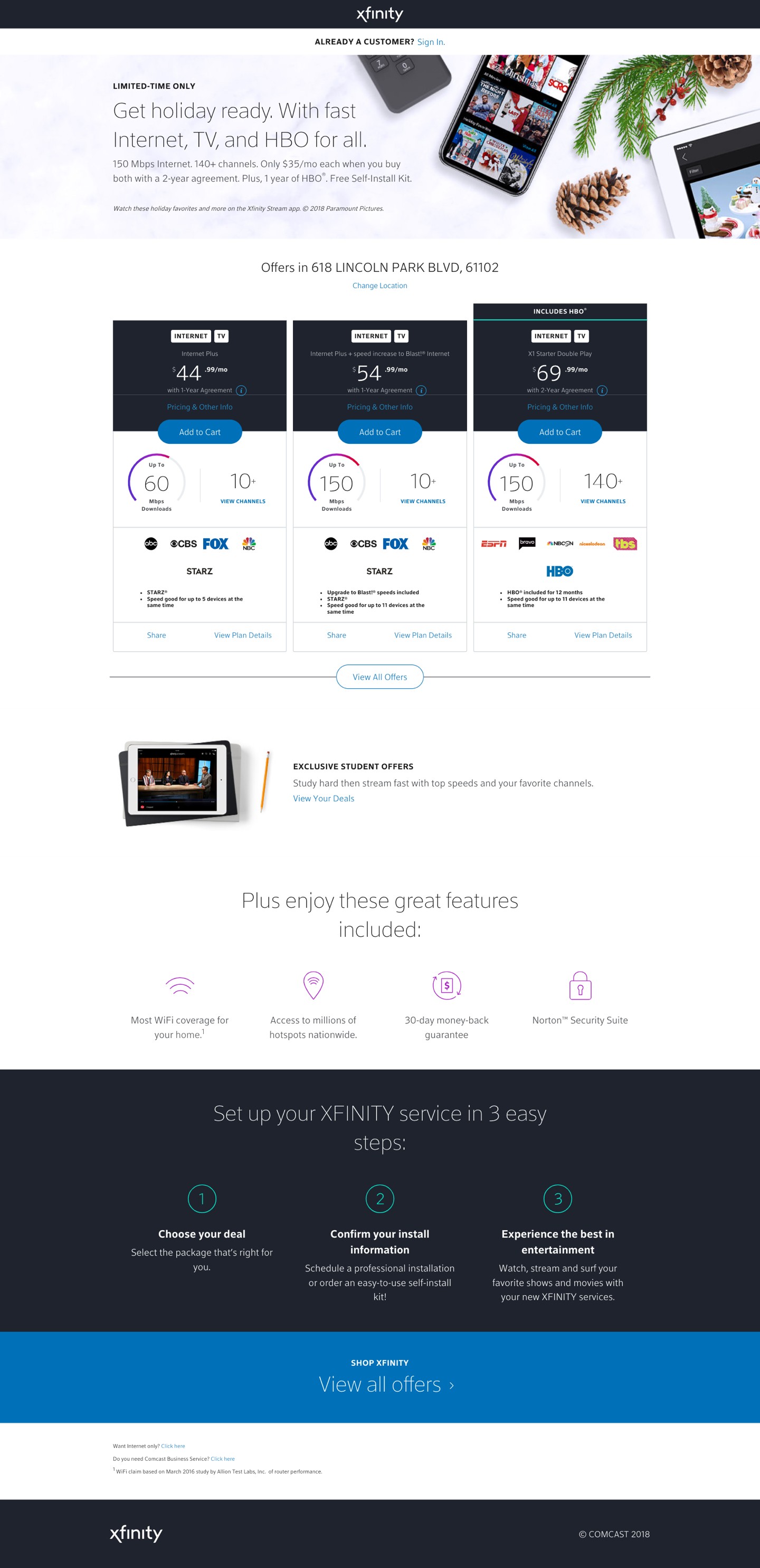
Current Paid Search Landing Page with offers above the fold.
The Design Journey
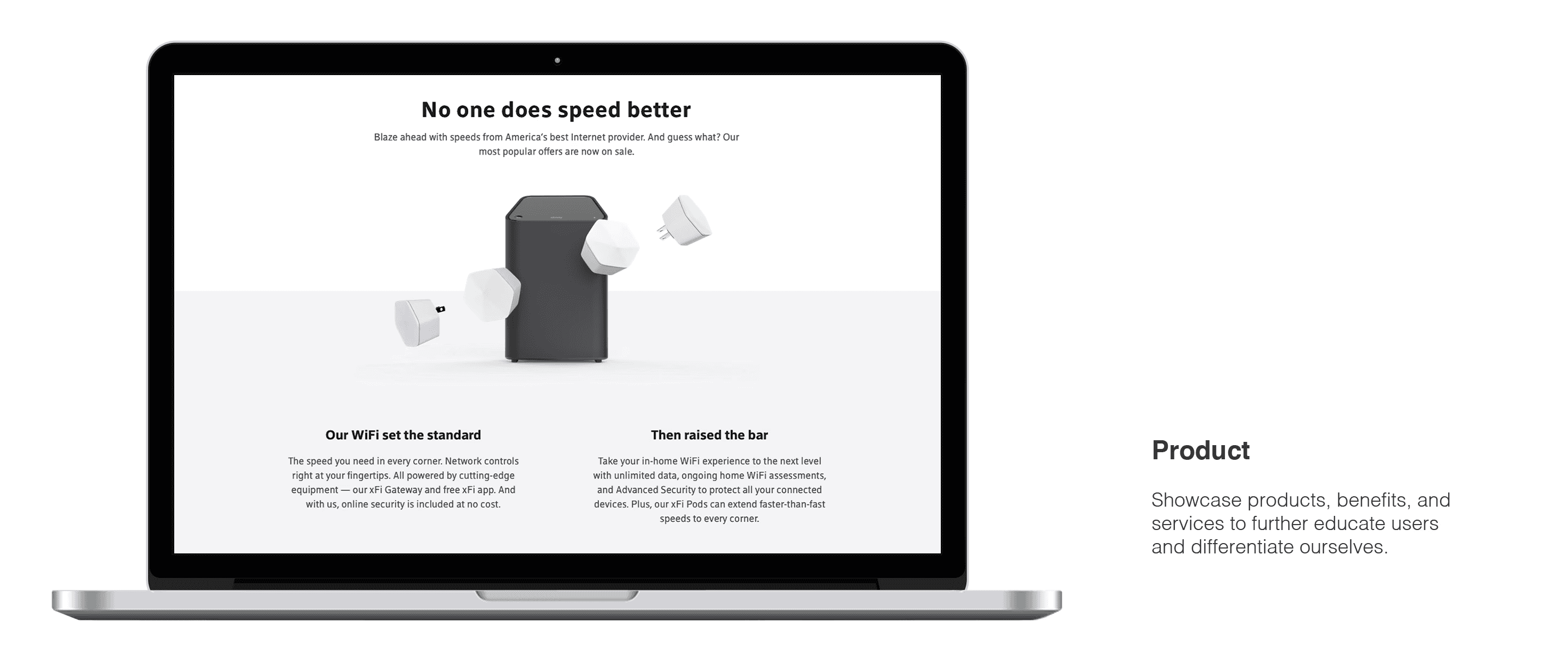
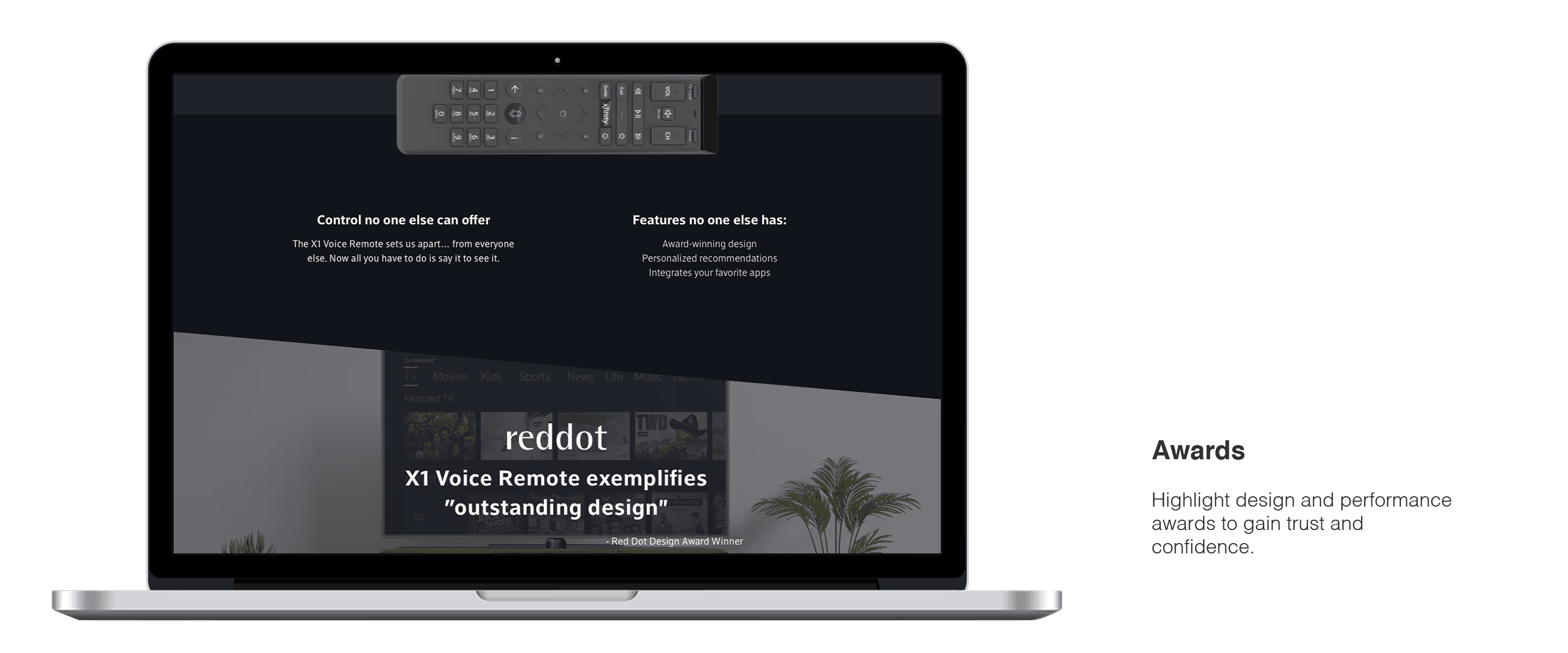
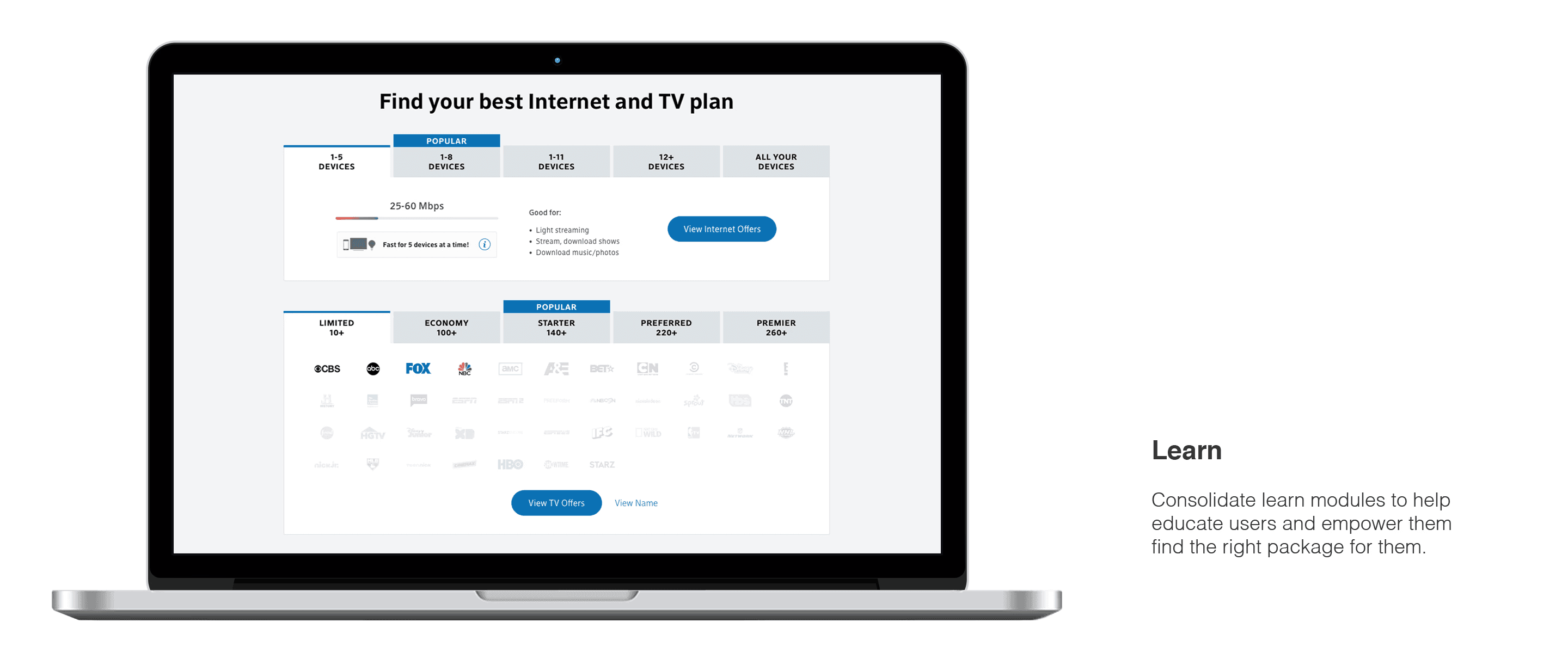
Hypothesis: Adding Internet & TV learn content, coupled with customer testimonials and third party awards, will improve users’ clarity of what is being offered, better educate users on available services, and improve trust & confidence — thus increasing acquisition measured through sales KPIs.
Failed Start: In an early iteration, we introduced a scrolljacking interaction to manage the increased page length. However, since this was the team's first full page redesign test, we encountered significant issues. The page load time exceeded one minute, leading to high user drop-off rates and dissatisfaction among stakeholders. Additionally, user testing revealed that while the new learning modules were well-received, the scrolljacking feature created friction, particularly for older users, highlighting it as a notable pain point.
Building Trust: We simplified the design to test whether the increased page length was a major issue. In an A/B/C test, we placed the learning modules both above and below the offer cards. The variation with the learning modules above the offer cards significantly outperformed the Business As Usual (BAU) setup, as well as the version with the modules below. We also saw a notable increase in video attach rates. This success renewed stakeholders’ confidence in our direction and opened the door for us to push the design further!
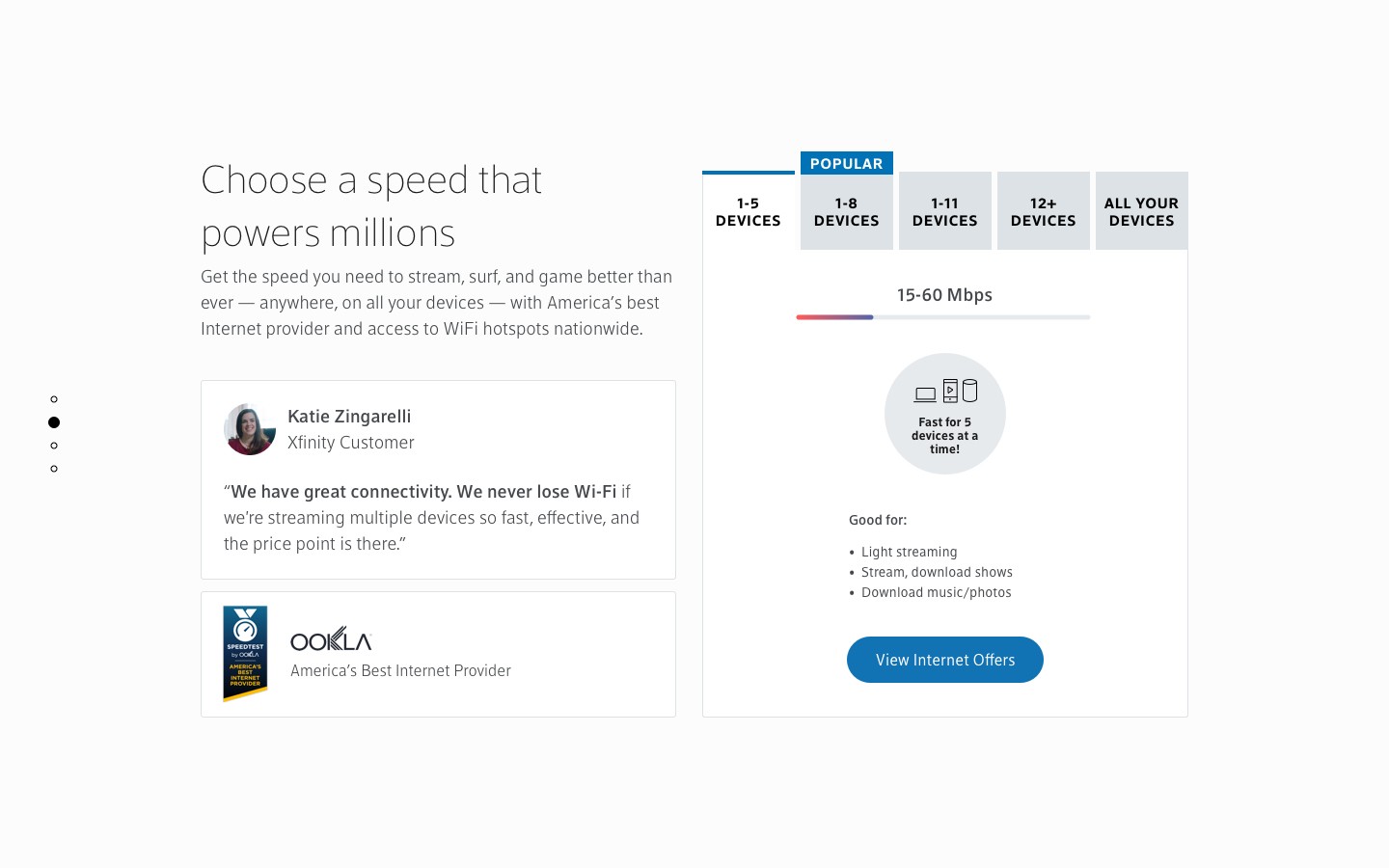
Internet learn content.
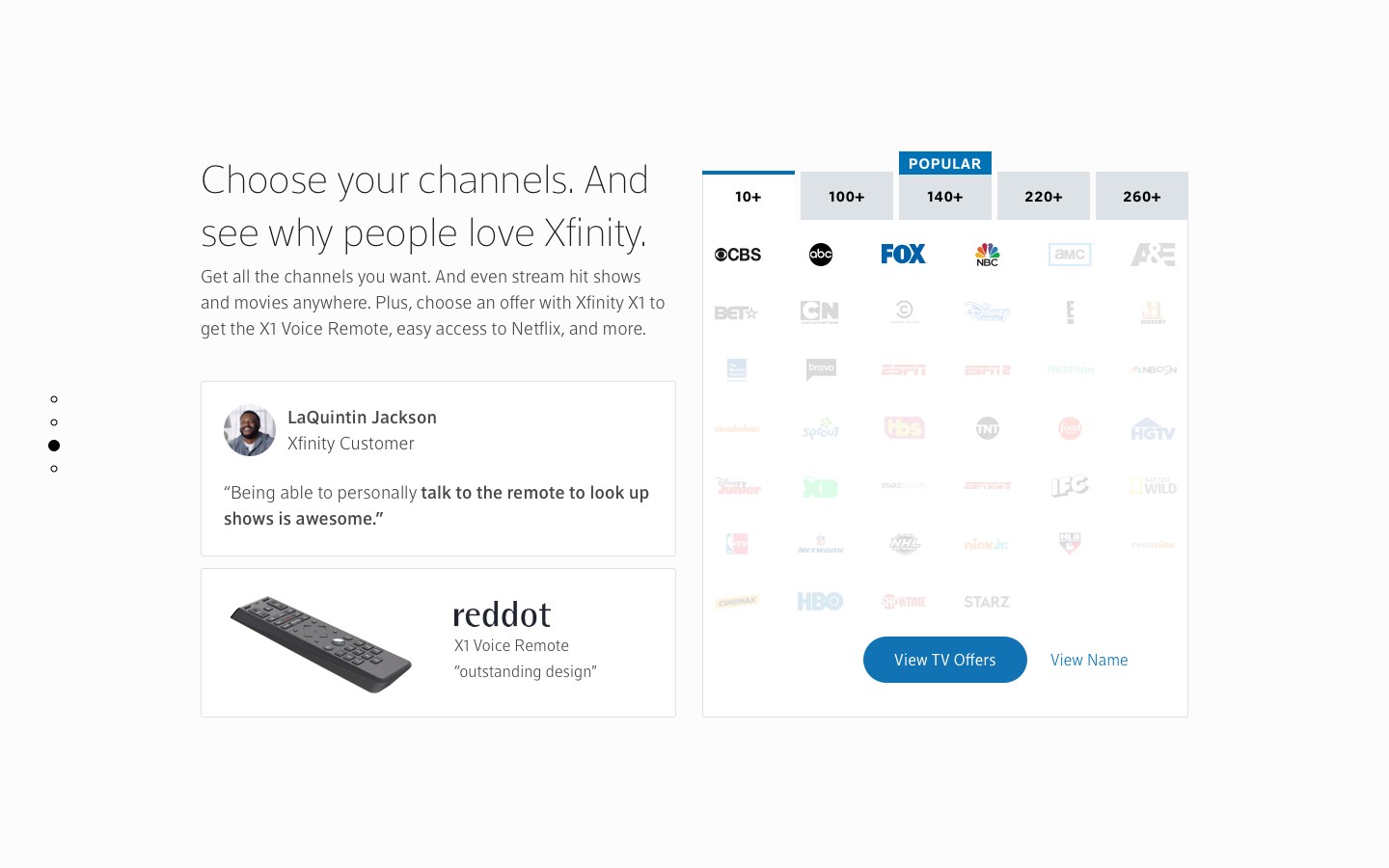
TV learn content.
Brand & Psychology: We pushed the visual design of the page to align with a potential rebrand while strategically incorporating elements that target the Stimulance and Dominance Systems from the limbic model. This model identifies key emotional drivers influencing customer behavior. The Stimulance System focuses on curiosity, learning, and the desire for new experiences, while the Dominance System emphasizes performance, self-assertion, and the pursuit of status, power, and autonomy. By integrating content that speaks to both systems, we aimed to enhance engagement and appeal to the diverse motivations driving user actions.
The Business Impact
We AB tested the redesign and saw an increase in cart addition rate, as well as an increase in sales conversion rate by 11% at confidence — our acquisition metrics. We had only tested the redesign in one of three divisions. The next step is to expand the test further into another division to see if the results hold.
RELATED CASE STUDIES
VIEW ALL CASE STUDIES
Grammarly
Extension & App
Helping users understand value fast, resulting in a 40% lift in conversion.
Grammarly
Extension & App
Optimizing the free trial journey to drive a 23% increase in upgrades.